Understanding Backflow
Backflow is the unwanted reversal of water flow that can allow water or other substances from a connected system to enter the potable water supply. It can occur through backpressure or backsiphonage, making proper backflow protection an important part of protecting our drinking water.
Cross-connection control helps identify potential sources of contamination and ensures appropriate protection is in place to prevent unwanted flow into the potable water system.
At BRANHATT Utility Services, we help protect the water you depend on through professional backflow testing, repair, and replacement.
Click on each tab to learn more.
-
Understanding the Reverse Flow of Water
A potable water system is designed to deliver drinking water from the water supplier to the customer. Under normal operating conditions, water flows in the intended direction through the distribution system and the customer's plumbing.
However, water does not always remain moving in that direction.
Changes in pressure can cause water to reverse direction and flow back toward the potable water supply. This unwanted reversal of flow is known as backflow.
Backflow becomes a concern when the water flowing backward comes from a source that could introduce substances or contaminants that are not intended to be part of the drinking-water supply.
The U.S. Environmental Protection Agency (EPA) identifies backpressure and backsiphonage as the two basic mechanisms through which backflow can occur.
-
Backpressure
When downstream pressure becomes greater than supply pressure
Backpressure occurs when the pressure in a customer's plumbing system or another connected system becomes greater than the pressure in the potable water system.
When downstream pressure exceeds the pressure on the supply side, water can be forced in the reverse direction.
Backpressure can be created by a variety of conditions and equipment, including:
Pumps
Elevated tanks
Boilers
Pressurized vessels
Heating systems
Industrial equipment
Irrigation systems
Other systems capable of producing pressure greater than the potable supply
A simple example
Imagine a facility where potable water is supplied to a piece of equipment containing water under pressure.
If the pressure inside that equipment becomes greater than the pressure in the potable water line, the pressure differential can create conditions where water can move backward toward the drinking-water supply.
That is backpressure.
-
When a drop in supply pressure creates a siphoning effect
Backsiphonage occurs when the pressure in the potable water system drops sufficiently to create a siphoning effect that can draw water or other substances backward through a cross-connection.
Unlike backpressure, backsiphonage does not require the downstream system to have a higher pressure.
Instead, the concern is a reduction in pressure on the potable-water side.
Conditions that can contribute to a significant pressure reduction can include:
Water-main breaks
Water-main repairs
Fire-flow demands
Heavy water use
Distribution-system disturbances
Other conditions that cause a substantial loss of pressure
A simple example
Consider a hose submerged in a container of non-potable water.
Under normal conditions, potable water is flowing from the supply through the hose.
If the supply pressure suddenly drops, the pressure relationship can change. Under the right conditions, the water in the container can potentially be drawn backward through the hose toward the potable system.
That is backsiphonage.
-
Backflow itself is a change in the direction of water flow.
The concern is what may be carried by that reverse flow.
A potable water system can have connections to many different types of equipment and systems. Some of those systems contain water that is not intended for human consumption.
Depending on the facility, potential sources can include:
Irrigation systems
Irrigation systems may contain fertilizers, pesticides, soil, stagnant water, or other substances that should not enter the potable water supply.
Swimming pools and spas
Pool water is treated with chemicals and is not potable water.
Heating and boiler systems
Heating systems can contain treatment chemicals, corrosion inhibitors, stagnant water, or other substances.
Fire protection systems
Fire protection systems may contain stagnant water and, depending on the system, treatment chemicals or other substances.
Industrial processes
Industrial facilities can contain numerous connections involving chemicals, process water, machinery, tanks, and other materials.
Commercial equipment
Restaurants, medical facilities, laboratories, manufacturing facilities, and other commercial properties can contain specialized equipment connected to potable water.
The potential hazard depends upon what is connected to the potable system and what could enter it if backflow occurred.
-
A cross-connection is a connection or arrangement that provides a potential pathway between a potable water system and another source of water or substance.
Cross-connections can be intentional or accidental.
They can also be temporary or permanent.
A common example is a hose connected to a potable water faucet and submerged in a bucket, tank, pool, or other non-potable source.
The connection may appear harmless under normal pressure conditions.
But if the potable water pressure changes, the hose can potentially become a pathway for reverse flow.
That is why cross-connection control is an important component of protecting drinking-water systems.
-
Preventing the Problem Before It Happens
Cross-connection control is the process of identifying potential connections to a potable water system and providing appropriate protection against contamination through backflow.
The goal is not simply to install backflow prevention assemblies.
An effective cross-connection control program involves multiple components.
Identify
Potential cross-connections must be recognized.Evaluate
The connection must be evaluated to determine the potential hazard and the appropriate level of protection.Protect
Appropriate backflow protection must be provided where required.Test
Applicable testable backflow prevention assemblies must be tested according to the requirements governing the water system and the assembly.Maintain
Backflow prevention assemblies are mechanical devices and may require maintenance or repair.Document
Testing, repairs, replacements, and other required information should be properly documented and reported as applicable. -
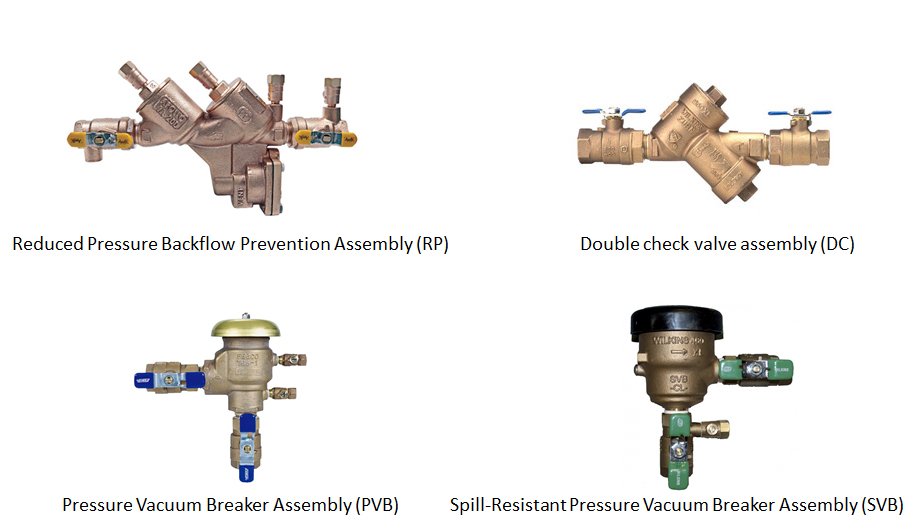
Backflow prevention assemblies are engineered devices designed to help prevent unwanted reverse flow into a potable water supply.
Different types of assemblies provide different levels and methods of protection.
The appropriate assembly depends on factors such as:
The type of connection
The potential hazard
Whether backpressure is possible
Whether backsiphonage is possible
Whether the substance involved represents a health hazard
The plumbing configuration
Applicable codes, standards, and water-system requirements
This is why one backflow prevention assembly is not appropriate for every situation.
The protection has to be appropriate for the actual hazard.
-
A backflow prevention assembly is a mechanical device.
Mechanical components can wear, deteriorate, become fouled, or otherwise fail to perform as intended.
Testing provides a means of evaluating the operating performance of applicable testable assemblies.
A proper test can help identify conditions such as:
Failed check valves
Inadequate pressure differentials
Relief-valve problems
Fouled or damaged components
Other conditions that prevent the assembly from performing as required
A test result provides information about the condition of the assembly at the time it is tested.
Testing is therefore an important component of maintaining backflow protection.
-
A failed test does not automatically mean that the entire assembly must be replaced.
The appropriate response depends upon the type of assembly, the nature of the failure, the condition of the device, available repair parts, applicable requirements, and the particular installation.
A failed assembly may be:
Repaired
If the assembly is serviceable and appropriate repair is possible, components can be serviced or replaced.Replaced
If the assembly is damaged, obsolete, beyond economical repair, improperly applied, or otherwise requires replacement, a new assembly may be appropriate.Retested
Following applicable repair work, the assembly should be tested again to verify its operating performance. -
These three services are often confused.
TESTING
Testing evaluates the performance of the backflow prevention assembly.REPAIR
Repair restores a serviceable assembly by correcting the condition that caused it to fail.REPLACEMENT
Replacement removes an existing assembly and installs an appropriate new assembly when replacement is necessary or appropriate.At BRANHATT, we believe customers should understand the difference.
A failed test should result in an evaluation of the device—not an automatic recommendation to replace it.
-
The federal EPA provides important guidance regarding drinking-water protection and cross-connection control.
However, Virginia-specific requirements are established and administered through the Commonwealth.
The Virginia Department of Health (VDH), Office of Drinking Water (ODW) oversees Virginia's public waterworks program and establishes requirements applicable to Virginia waterworks.
Virginia's regulatory framework addresses matters involving the protection of public water supplies and cross-connections.
For Virginia customers, the applicable requirements can depend on factors including:
The type of water system
Whether the connection is served by a regulated public waterworks
The type of cross-connection
The degree of hazard
The type of backflow prevention assembly
The applicable Virginia regulations
Local water-system requirements
ODW requirements and guidance
This is why Virginia requirements should always be checked against the current ODW regulations and guidance rather than relying solely on general national information.
-
In Virginia, backflow prevention and cross-connection control for public water supplies are primarily regulated by the Virginia Department of Health (VDH), Office of Drinking Water (ODW).
The ODW is responsible for protecting public drinking-water supplies and administering Virginia's Waterworks Regulations. These regulations establish requirements for waterworks and address the control of cross-connections and the use of backflow prevention to protect the public water supply.
Virginia's requirements are found primarily in 12VAC5-590, Waterworks Regulations, under the authority of the Virginia Department of Health.
What Does the Office of Drinking Water Do?
The ODW works with Virginia's public waterworks to:
Protect public drinking-water supplies from contamination
Establish requirements for cross-connection control
Require appropriate backflow protection where applicable
Oversee waterworks compliance with Virginia regulations
Provide regulatory guidance to waterworks
Review and oversee waterworks programs and operations
What About the EPA?
The U.S. Environmental Protection Agency (EPA) provides the federal framework and guidance for protecting public drinking-water systems, including information concerning cross-connections and backflow.
However, EPA is not the agency that comes to Virginia businesses and administers their individual backflow testing requirements. Virginia's requirements are administered through the Commonwealth, primarily through VDH's Office of Drinking Water.
What About the Local Waterworks?
The waterworks serving a property also plays an important role.
A Virginia waterworks may have its own cross-connection control program, policies, procedures, and requirements that customers connected to that system must follow, provided they are consistent with applicable Virginia requirements.
This means that the exact requirements applicable to a particular property can depend on the waterworks serving the property, the type of connection, the degree of hazard, and the applicable Virginia regulations.
What About the Backflow Tester?
A backflow tester performs the testing according to the applicable requirements and submits the required documentation to the appropriate party. The tester does not create the regulations.
At BRANHATT Utility Services, we work within the requirements established by Virginia and the applicable waterworks to provide backflow testing, repair, and replacement services.
Bottom line:
VDH's Office of Drinking Water is the primary state regulatory authority for public waterworks and cross-connection control in Virginia, while individual waterworks administer their applicable cross-connection control requirements for their customers.